Film Review: Lomography Lomo 400 in Medium Format
Trying new film stocks is a great way to shape your visual style. In my Film Review series, I reflect on my experience shooting various film stocks and share sample images from the roll to help you decide if this film stock is worth a try.
After completing my 12-month Rolleiflex Challenge last year, my love for Kodak Gold reignited, and it quickly became my go-to choice. With the limited selection of 120 film stocks available these days, I was excited to try out some film from Lomography, an iconic analog brand known for its experimental approach to film photography. Lomography makes playful, quirky cameras like the Holga, which first introduced me to medium-format film back in 2001.
As film photographers, testing different film stocks is an important part of our creative process, expanding our experience and helping to find the look that suits our personal style. What film stocks do you reach for most often? I’d love to hear from you!
First Impressions of Lomography's Lomo 400 in 120 Format
Lomo 400 caught my eye as a budget-friendly color film stock. At 400 ISO, it’s versatile in mixed lighting conditions, offers minimal grain, and delivers saturated colors. At around €15 per roll, Lomo 400 film is an affordable option for medium format enthusiasts and delivers lovely results. Plus, it’s fairly easy to find online or at your local camera shop.
After shooting two rolls of Lomo 400 in 120 format with my Rolleiflex 2.8F, I’m ready to share my thoughts. Amsterdam’s spring light and pastel tones paired well with this film’s retro touch. Lomo 400 delivers vibey results. Just be ready for a little bit of unpredictability!
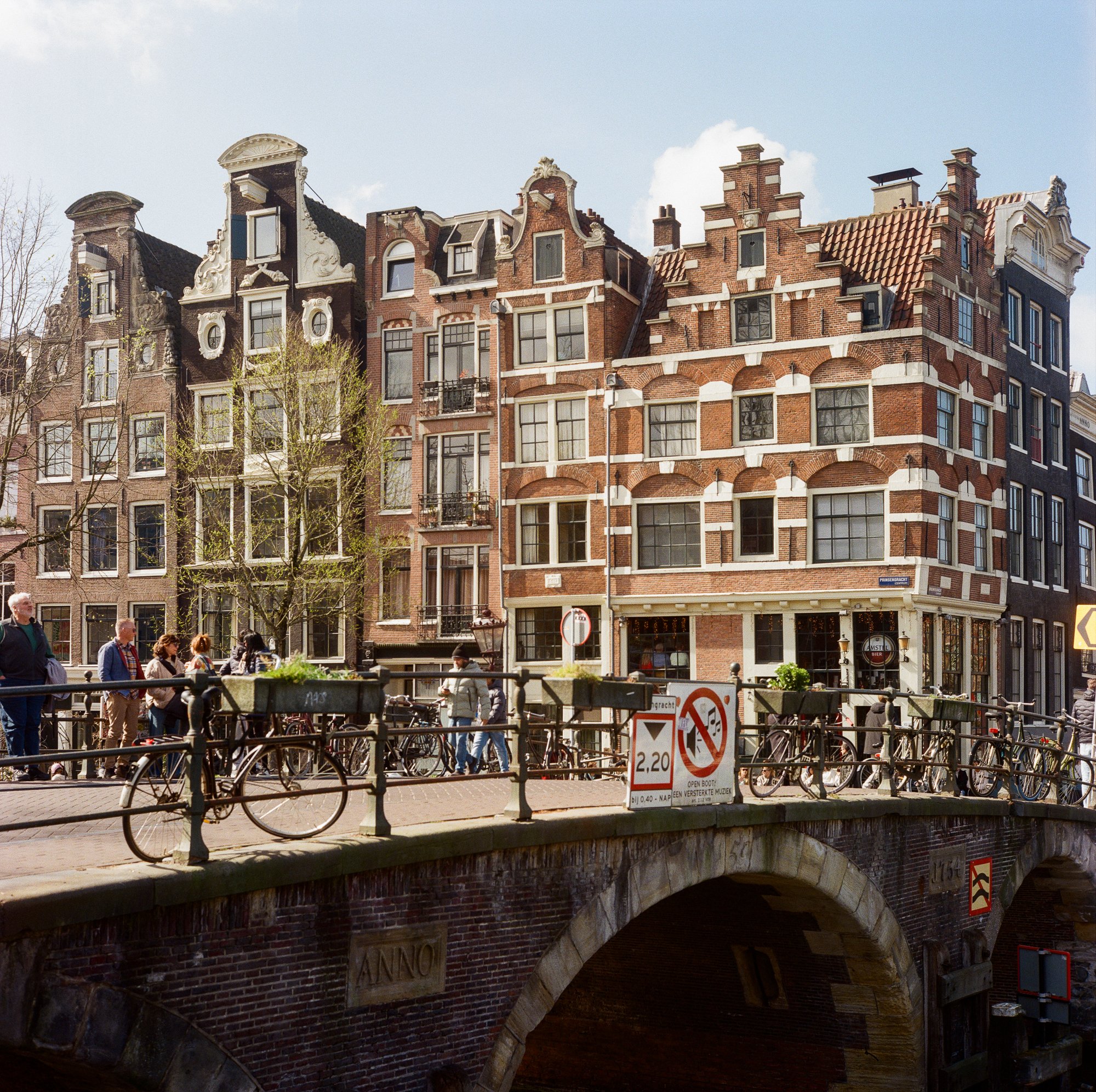
Lomo 400 stock nailed it… most of the time. I tested this film in Amsterdam at two different locations with different light conditions. First, at the cherry blossom park and then during a Femmes & Thems Film Club meetup. Amsterdam’s moody spring weather gave me a chance to see how this film performed in mixed light conditions.
Overall, I was impressed with Lomo 400. The first set of sakura photos rendered a spring-like palette, with soft colors and a nostalgic feel. The photos I took along Amsterdam’s canals have a nice color range with golden highlights, subtle blues, and soft greens. Perhaps the overcast skies also added to the retro, cinematic look and I liked it.
Other Lomography films tend to be a bit more intense in contrast and saturation, but my results with Lomo 400 feel more nuanced, and that’s cool with me.
Shooting Lomo 400 comes with a few quirks
Looking at the scans for a moment, I questioned my camera, skills, and maybe my sanity. Every once in a while, the film gods remind me that mistakes and surprises are simply part of the analog process. My first roll of cherry blossoms in Amsterdam only yielded 10 frames instead of the usual 12. Bummer! After running nearly 100 rolls through my Rolleiflex, this raised a red flag. Concerned that something unusual had happened internally, a wave of stress washed over me when I noticed the first frame was so close to the end of the roll that it was damaged during development. Yikes! You can see it in the gallery below.
Went wrong? I’m not exactly sure. I assumed it was user error or a camera glitch. Thankfully, the next roll provided the usual 12 frames, so it’s safe to say this was likely a product issue. Perhaps the backing paper on the first roll did not trigger the frame counter properly? Have you experienced something similar? Either way, let’s be real: with the cost of medium format film, every frame counts, and losing shots to flimsy film construction was definitely frustrating.
My second roll ended up with faint light leaks on the right edges of the negatives. After heading down a film-nerd rabbit hole, I learned that Lomo 400 is notorious in the analog community for being a "fat roll." Meaning that it tends to wind loosely on the spool, making it extra vulnerable to light leaks during handling and storage. Don’t get me wrong, light leaks can add funky character, but these weren’t anything special or charming. Fortunately, they were along the edge and easy to crop out.
The verdict: if you're new to medium format, Lomo 400 is a fun, affordable option. Give it a try!
I offer helpful resources on travel, film, and photography. Share this story with a friend or donate a roll of film to support this type of free content.


Wanna try Lomo 400? Find my tips below…




The Verdict: Give Lomo 400 a Try… But proceed with care
Despite a few minor issues, I genuinely liked the look of Lomo 400. When this film behaves, it delivers soft, nostalgic images that are warm and moody, which fit my natural light vibe.
Would I shoot it again? Definitely. I still have a third roll to shoot, so maybe this time I’ll get lucky with all 12 frames and zero light leaks!? I’ll be more mindful next time and adjust my expectations.
For client work or particularly meaningful shoots, I’ll likely stick to my Kodak Gold or Portra, unless the client is open to happy accidents and imperfections, which add a unique character to film shooting.
Tips for Shooting Lomo 400 in 120 Format
Wind the roll tight after shooting
Keep exposed rolls in a light-safe bag to avoid light leaks
Always store your rolls in a cool, dry place (I stash mine in a Tupperware box in the fridge)
Don’t expect perfection, just embrace the quirks
Order in a 3-pack to save a few bucks
Have you shot Lomography 400 film before or is it on your list to try? I’d love to hear your thoughts!
Feel free to share a link to your own photos in the comments below. If you found this review helpful, consider sharing it with another film photographer who might enjoy it too.
